
Looking for the truth about Activated Charcoal for Teeth? The real answer is not found in the shiny, black tubes that are getting viral on your social media, it’s the blunt warnings of dentists. The trend going viral promises a brilliantly, naturally white smile, but dentists are disclosing a quite scary fact: this abrasive material might be wearing down your enamel and damaging your mouth just for a quick aesthetic change. In fact, there is a lot of excitement about Activated Charcoal for Teeth, however, the dental professionals are warning.
So, why is a product hailed as a “miracle whitener” causing such concern in dental clinics? The conflict between compelling influencer testimonials and established dental science creates a dangerous confusion. This article cuts through the hype to deliver the urgent, evidence-based verdict you need on Activated Charcoal for Teeth. We’ve compiled the critical insights dentists wish every patient knew before picking up a charcoal product.
You should continue reading this definitive guide because we move beyond the simple “does it work?” to expose the how and why behind Activated Charcoal for Teeth—the abrasive mechanics, the lack of fluoride, and the real risk of permanent damage. We try to answer your most basic questions: Is it really going to make the teeth white or just get rid of the surface stains? Is activated charcoal toothpaste safe for daily use? What are the safer proven alternatives of brighter smile?
This isn’t just another review; it’s a protective briefing based on dental authority (EEAT) and clinical evidence about Activated Charcoal for Teeth. You’ll discover:
The Abrasive Truth: The Way in Which Activated Charcoal Functions to Whiten Teeth Is the Exact Reason It Causes Damage to Tooth Enamel
The Fluoride Void: Why most charcoal pastes omit this essential cavity-fighting ingredient, leaving you vulnerable.
The Long-Term Risk: Long-term use of Activated Charcoal for Teeth can cause enamel to wear down, making teeth more sensitive and yellowing. Plus, it can lead to cavities too.
Dentist-Approved Alternatives: They are the most recommendable and safe whitening solutions suggested by dentists.
This is your one and only enamel. Don’t be so quick to hop on the wagon of the latest craze before finding out the shocking facts that might protect your smile. It is really important to know what Activated Charcoal for Teeth really does to your teeth.
Table of Contents
ToggleDoes Activated Charcoal Toothpaste Really Work? The Definitive Answer
The short, critical answer is not in the way it is marketed, and not without significant risk. Activated Charcoal for Teeth in toothpaste form does not “whiten” teeth in the same way professional bleaching agents do. Charcoal toothpaste should not be used too frequently because the abrasion could be damaging to the teeth and wear down the tooth enamel. Users should be aware that this type of toothpaste does not contain fluoride which is essential for protecting teeth against decay.
Consequently, if your teeth are discolored primarily by these surface-level stains, you may perceive a slight brightening effect initially. However, this is not true whitening. However, this is a stain removal method that comes with a pretty high price in terms of enamel loss.
Besides, the abrasive action is quite ruthless as it not only removes the stain but also wears down the scarce enamel of teeth. For this reason, while you might be asking “does it work,” the more pertinent question dentists urge you to consider about Activated Charcoal for Teeth is: “At what long-term cost does this temporary effect come?”
How Charcoal Temporarily Removes Stains on Teeth
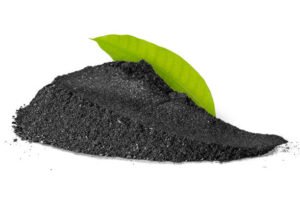
If you were to magnify your tooth enamel, you’d notice all kinds of nooks and crannies, crevices, pores, and ridges. That’s just the nature of tooth enamel. As a result, extrinsic stains get trapped in these tiny pores. With its porous and super adsorbent structural formation, activated charcoal is produced. When brushing, these porous particles function as very small sponge-like roughness, they move over the enamel and adsorb (attach to their surface) some of the stain molecules while at the same time abrading (scraping away) others.
This process creates the immediate but superficial result users see from Activated Charcoal for Teeth. However, because it only affects the very outer surface, it is completely ineffective against intrinsic stains—the yellowing or graying that occurs within the tooth’s inner dentin layer due to aging, trauma, or certain medications. This is one of the fundamental facts that activated charcoal in the mouth can never cause to pass this limit.
The question that needs to be answered before using charcoal as a teeth whitener is: Do I want to remove the stains or am I wishing to be really white? Your answer could make a big difference in terms of your enamel health. Find out why this abrasive procedure of Activated Charcoal for Teeth can be a perilous compromise by continuing to read.
Is Activated Charcoal Toothpaste Safe? The Dentist’s Warning
This leads us to the most critical question: is activated charcoal toothpaste safe? The plain truth that is backed by a majority of dental profession is that Activated Charcoal for Teeth is an inefficient and even dangerous teeth-whitening method in which charcoals toothpaste has serious side effects of charcoal toothpaste.
True teeth whitening is a chemical procedure that involves the use of peroxide-containing substances to percolate through the enamel and disintegrate deeper and natural stain molecules that eventually result in a less dark shade of the teeth. Activated Charcoal in Teeth is not at all chemically bleached. It’s all cosmetic, like you know, skimming the dirty window as opposed to changing the color of the glass.
The American Dental Association (ADA) has plainly stated in its official position on charcoal and DIY whitening that no charcoal‑based toothpaste has been granted the ADA Seal of Acceptance as there is a lack of convincing evidence showing safety and effectiveness of Activated Charcoal for Teeth. Actually, the ADA cautions that such products might cause more harm than good. This is indeed one of the main reasons why dentists don’t recommend charcoal toothpaste.
Surface-Level vs. Deep Whitening: The Critical Difference
That marketing Activated Charcoal for Teeth plays hide and seek with this very basic notion hence, an activated charcoal toothpaste pros and cons breakdown becomes necessary:
Surface Stain Removal (Charcoal’s Role): Temporary, abrasive, only working on outside stains. The result being not stable and changing can be rapidly induced by eating stain-causing foods/drinks.
Deep Whitening (Professional Treatment): This involves the use of safe and approved levels of hydrogen peroxide or carbamide peroxide to oxidize and destroy the compounds involved in the generation of stains in the structure of the tooth that diminishes the molecular or optical characteristics that generate this discoloration.
Using Activated Charcoal for Teeth to whitening is such a choice as to use sandpaper to clean a great pearl; you may wipe it clean, but you are permanently destroying the sparkling finish. The process of achieving a truly whitish smile needs to be effective both internally and externally instead of being corrosive externally as in the case of Activated Charcoal for Teeth.
Don’t settle for superficial stain removal that risks your enamel. Discover the best alternative to charcoal toothpaste and the deep-whitening alternatives that dentists actually recommend in the section below, moving beyond the trend of Activated Charcoal for Teeth.
Does Charcoal Toothpaste Damage Enamel? The Erosion Problem
The opinion of the dentist regarding Activated Charcoal on Teeth is unanimously negative. Activated Charcoal for Teeth is not healthy when it comes to the oral health of the teeth. Its coarse nature is an immediate hazard to your enamel and most of the formulations do not contain necessary fluoride which is not a bargain in avoiding tooth decay.
Dentists observe the aftereffects in their patients who have become hypersensitive, have worn out enamel and are more prone to cavities due to the long-time use of the abrasive pastes such as Activated Charcoal for Teeth. In fact, newer several peer-reviewed research reveal the presence of a direct link between toothpaste abrasiveness and enamel erosion and they sound the point that high-abrasion products, like charcoal pastes, could cause irreversible damage.
The Proven Dangers and Side Effects
The dangers of charcoal toothpaste mostly deal with the abrasive nature of the product. Charcoal-based toothpaste products can be the cause of enamel abrasion when used on a regular basis, and instead of eliminating the staining, they cause the teeth to become more yellow as more dentin is revealed. This might make the teeth ultrasensitive to cold and hot beverages besides being more vulnerable to tooth decay and infection.
Does Activated Charcoal Damage Teeth? The Enamel Erosion Problem
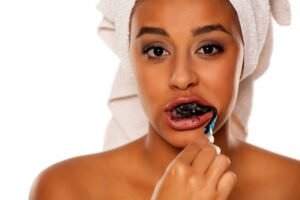
Yes, it is capable of doing a lot of harm. The main issue, does charcoal toothpaste harm enamel, certainly has a definite response. Even though tooth enamel is the most durable material in the human body, it’s non-renewable. Once it’s removed, that’s it for good. The Relative Dentin Abrasivity (RDA) scale is used to determine the abrasiveness of toothpastes.
While safe, effective toothpastes have an RDA typically under 250, studies have shown that some popular products with Activated Charcoal for Teeth have RDAs soaring above 300, placing them in a dangerously abrasive category.
With repeated use of Activated Charcoal for Teeth, this high abrasiveness leads to:
Enamel Thinning: The protective layer becomes weaker and thinner.
Increased Sensitivity (Charcoal Toothpaste Sensitivity): When enamel is worn down, dentin underneath (which has very small tubes that connect to the nerve) is exposed and that leads to a toothache from very hot, cold, or sweet things, a direct link to charcoal toothpaste sensitivity.
Yellowing Appearance: The irony is that as the precious enamel is somewhat in fact clarified, the natural yellow color of the dentin underneath is more visible. This is the reason why the teeth look more yellow and it is exactly the opposite result that is desired from Activated Charcoal for Teeth.
Increased Cavity Risk: Thinner enamel is easier for acids and bacteria to penetrate.
If these symptoms are currently being experienced by you, rest assured as you can take some steps to protect and enhance your teeth. Learn the remarkable ways to naturally boost weak enamel: The 17-Day Home Kitchen Cure (Immediately) for dental professional backed strategies to maintain your enamel.
What Are the Other Dangers of Using Charcoal Toothpaste?
Activated Charcoal for Teeth side effects are not limited to just enamel erosion, but there are several other potentially harmful and scary elements related to the use of charcoal toothpaste.
The Fluoride Void: Leaving Teeth Vulnerable to Decay
Most of the charcoal toothpastes confuse themselves to be the “natural ones and most of them do not contain fluoride, the mineral which has been proven scientifically as the primary one in prevention of the cavities. Fluoride also helps the damaged enamel to heal itself to normal stature making it resistant to the acids, which are brought about by the plaque bacteria.
Thus, brushing your teeth with any non-fluorinated anti-in the toothpaste with activated charcoal, you will only be able to brush the surface and will not leave the necessary protective factor time to act. This is because, in addition to having clean teeth, they will be utterly exposed, and your risks of developing tooth decay will multiply significantly in the long run.
A major weakness of Activated Charcoal for Teeth is that it does not provide the protective factor that fluoride does. (If you’re looking for a truly natural yet effective alternative, explore 7 Proven Benefits of Nano-Hydroxyapatite Toothpaste: A Dentist’s 2024 Guide to Stronger Enamel—a fluoride‑free option that actually strengthens enamel.)
The Gray Zone: Unexpected Staining and Gum Recession
A very harsh irony of taking Activated Charcoal for Teeth is that it is very likely to cause the teeth to become stained. The thin black pieces can get stuck in the smallest cracks of the older enamel and porous surfaces of the dental fillings, crowns, or even around the edges of the teeth, thus leading to a gray or black outline.
On top of that, the abrasive grit can also be very damaging to the soft gum tissues and can cause irritation, inflammation, and in the long run, the gum will recede, meaning that the gum line pulling away and the sensitive tooth roots exposed.
Take a look at your toothpaste tube. If it has Activated Charcoal for Teeth and no fluoride, then you are basically exchanging the temporary result of removing stains for the risk that the enamel might be decaying, and it will become sensitive over time.
Anyway, you could think of using a charcoal toothpaste approved by American Dental Association (ADA), but wait, there is a problem: these products do not actually exist! The ADA hasn’t approved charcoal toothpaste because they have safety reservations about it. So maybe consider making the switch to an ADA-approved whitening toothpaste instead?
Charcoal Toothpaste vs Whitening Toothpaste: An Evidence-Based Comparison
Charcoal toothpaste vs whitening toothpaste-choices do not match. Soaking up like a sponge is a type of activated charcoal toothpaste pros and cons list which highlights that cons are more dominant than pros.
| Feature | Charcoal Toothpaste | ADA-Accepted Whitening Toothpaste |
|---|---|---|
| Whitening Action | Abrasive, surface-only stain removal. | Combines mild abrasives with chemical agents (e.g., peroxide) for surface & sub-surface stain breakdown. |
| Enamel Safety | High Risk. Often has a very high abrasive (RDA) value. | Low Risk. Formulated with safe, controlled RDA levels. |
| Fluoride Content | Typically absent, increasing cavity risk. | Always present to strengthen enamel and prevent decay. |
| ADA Seal of Acceptance | None. The ADA does not endorse any charcoal toothpaste. | Carried by all accepted products, verifying safety and efficacy. |
| Long-Term Outcome | Can cause enamel loss, sensitivity, and yellowing. | Safely maintains whiteness while protecting oral health. |
The reason is clear that the best alternative to charcoal toothpaste will be a whitening formulation that is approved by the ADA.
How Often Can You Use Charcoal Toothpaste? A Dentist’s Guidance
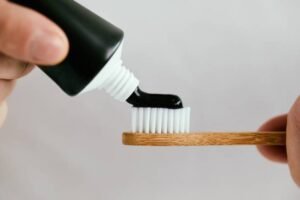
Considering the risks, the question of the frequency of how often can you use charcoal toothpaste issue. The answer to this question that is guided by the dentist is: very sparingly, no more. It must not be a day-to-day drive. When you can afford to do it, then be sure to use it not more than once a week, and never to brush it rough.
However, if you are sensitive to charcoal toothpaste, have enamel wear, gum recession and exposure of the tooth root then discontinue its use. A fluoride toothpaste is totally necessary for everyday brushing and whitening routine maintenance.
Evidence Check: What Peer-Reviewed Studies Really Say
Claims about “detoxification” and “antibacterial power” made by the marketing of Activated Charcoal for Teeth are not supported by scientific facts. A strong set of evidence, rather than the endorsements on social media, should be the basis for your health-related decisions concerning Activated Charcoal for Teeth.
The 2017 JADA Review: “Unsubstantiated Claims”
Further, the researchers pointed out the risk of dental problems due to the abrasive nature and lack of fluoride of charcoal products. This is a peer-reviewed, authoritative research that contradicts the anecdotal evidence which is the foundation of the trend around Activated Charcoal for Teeth and is one of the main reasons why dentists don’t recommend charcoal toothpaste.
Later studies have confirmed these results, highlighting that charcoal may in fact adsorb and make less effective even the good/tooth-friendly ingredients like fluoride that are usually present in a formulation. Also, in biological terms the mouth detox claim of activated charcoal is a nonsense when you consider Activated Charcoal for Teeth.
Your Safe Path to a Whiter Smile: Dentist-Approved Alternatives
Luckily, you don’t have to resort to risky unproven methods like Activated Charcoal for Teeth to get a brighter whiter smile. Dentistry has many safe, reliable, and successful solutions that not only get you those great results but also leave you free from the risk of Activated Charcoal for Teeth.
One of the ways is, for example, 12 Dentist‑Verified Tips to Whiten Teeth Naturally Fast (Safe & Effective!), which feature mild, tooth enamel-friendly methods to make your smile shine even more. This is your guide to the best alternative to charcoal toothpaste.
The Gold Standard: Professional In-Office Whitening
Professional in-office whitening gives you the most dramatic, fastest, and safest results by far. The dentists’ method involves the use of high concentration peroxide gels which are shielded from the gums using special barriers.
This method, which is lit or lasered to activate, is capable of accomplishing several shades of whitening in just one 60–90-minute session. Not being just a professional guidance, it ensures highest effectiveness while at the same time carefully looking after your gums and tooth enamel, thus giving you a dependable outcome quite unlike Activated Charcoal for Teeth.
The Daily Defender: ADA-Accepted Whitening Toothpastes
To get a bit of brightening effect and at the same time keep up with your oral health, grab a toothpaste from the shelves that has the good old ADA Seal of Acceptance for whitening. You’ll quickly realize, if you ever tried, that no charcoal toothpaste will get the ADA approval. So, instead, focus your attention on these whitening toothpastes which are actually certified. They usually have lower abrasiveness with safe RDA levels.
Additional Safe Strategies:
Custom Take-Home Trays: These kits are specially made by dentists to give you the kind of white that’s professional and perfect for your teeth – all while enjoying the comfort of your sofa. The kit includes custom fitted trays to make sure your gums are all safe from the effects of whitening.
Over-the-Counter Whitening Strips: ADA-accepted strips are generally a good option for the mid-level, but outcomes are not consistent and gum sensitivity may result.
Regular Dental Hygiene: The simplest way. You can eliminate surface stains with routine professional cleanings, and with daily fluoride toothpaste usage, new stains will not form. It is a much healthier and efficient alternative to Activated Charcoal for Teeth.
Your dentist is the only person who can really tell the nature of the discoloration on your teeth and suggest the safest and most effective whitening method for you. It can be a professional treatment or one of the ADA approved products your dentist would recommend you use in order to stay away from Activated Charcoal Teeth side effects!
FAQs
Does activated charcoal toothpaste really work?
It is scrubbing to take off some of the stains on the surface but not whitening of teeth by chemical reaction. Its performance is restricted, short-lasting and there are high chances of enamel harm and tooth decay because of its abrasiveness and absence of fluoride. The proof of Activated Charcoal for Teeth is not very strong.
Is activated charcoal toothpaste safe?
No, the bacteria that produce bad breath are eliminated by taking of charcoal dental products such as toothpaste. Nevertheless, charcoal may do little to your breath when you have problems with your gastrointestinal system, when you do not drink enough water, when you do not brush and floss your teeth every day.
Does activated charcoal whiten teeth?
No, that is not whitening at all. It simply removes external, superficial stains through physical scrubbing. However, it doesn’t really help with dealing with inherent, deep-seated discoloration of the tooth, which is likely the biggest drawback of Activated Charcoal on Teeth.
Does charcoal toothpaste damage enamel?
Yes. This is a primary danger. The abrasive particles can wear away tooth enamel, which does not regenerate. This erosion leads to sensitivity, yellowing, and higher cavity risk, directly answering the concern of does charcoal toothpaste damage enamel.
What are the charcoal toothpaste side effects?
The main downsides of activated charcoal toothpaste are loss of permanent enamel, heightened sensitivity of teeth, higher risk of tooth decay due to the absence of fluoride, gum discomfort, and discoloration of teeth or dental restoration.
Why dentists don’t recommend charcoal toothpaste?
Dental professionals advise against it for a few reasons: its benefits remain unconfirmed, it being quite abrasive, the usual lack of fluoride to aid cavities, and also there are safer and more efficient alternatives backed by scientific research and approved by ADA.
How often can you use charcoal toothpaste?
Is there an ADA approved charcoal toothpaste?
No. The American Dental Association recently stated that there would be no Seal of Acceptance for charcoal-based toothpaste as it doesn’t have sufficient proof on the safety and effectiveness of using activated charcoal on teeth.
What is the best alternative to charcoal toothpaste?
What is the safest method for teeth whitening?
Visiting a dentist is the best option when it comes to teeth whitening as it is the safest way. At home one can use safe ADA approved fluoride toothpaste which will help in removing some stains and keeping cavities at bay. But before you try any whitening product, get advice from your dentist, especially if you have any dental work was done. The reason is that some of the available whitening toothpaste options can be abrasive for your general tooth structure or over time leave damage to the tissues of your gum.
Your lovely smile is a lifelong asset. It is essential to take good care of your enamel. Throw away the risky guessing of fashionable solutions such as Activated Charcoal for Teeth. Give yourself a lift with scientifically proven methods of care. Send this post to a person who is thinking of using Activated Charcoal for Teeth and schedule a visit to a dentist to discuss with him/her how to get a bright, healthy smile through good, safe methods that have been proven. Your future self will be grateful to you for not falling for Activated Charcoal for Teeth.