
Introduction of Oil Pulling for White Teeth

So, how long does oil pulling take to whiten teeth? Where you had liked a straightforward answer, you are not alone.
The two extremes of the spectrum are an Ancient Ayurveda text and an Influencer on the latest wellness trends, which accord this practice the highest praise. Yet, the real picture is far more complicated. The truth is, oil pulling for white teeth provides a subtle brightening effect, not the dramatic, instant results of a professional treatment.
Most users report noticing subtle brightening and stain reduction after 2-4 weeks of consistent daily practice, as the oil helps lift surface-level stains and reduces harmful bacteria that cause plaque and yellowing.
This guide dispels the myths and gives you science-based answers. You will discover:
- The 5 specific results you can realistically expect from a daily oil pulling routine—beyond just whiter teeth.
- A clear, day-by-day timeline so you know exactly what to expect within the first 14 days.
- Avoid This #1 Beginner Mistake for Better Results.
- The proper way to do the technique with coconut oil to get the best effect.
- Science-backed verdicts on whether it truly removes toxins and fights cavities.
If you’re tired of confusing claims and need a clear, straightforward roadmap to decide if oil pulling for white teeth is worth your time, you’ve found it.
This guide provides the facts, not just folklore, on how to whiten teeth with coconut oil in 2 weeks. We will be upfront with you about it so that you can decide if this organic method is the right fit to get you that smile that is not only brighter but also healthy and strong.
Does Oil Pulling Actually Whiten Teeth? What Research Reveals:
Let us get right to it. If you have been toying with the idea of whether mouth oil swishing is a good time investment for having a whiter smile, then the answer is most definitely yes. However, it is important that you note the essential condition of this affirmative answer.
Imagine it in this way: your teeth are porcelain tiles. Food, beverage, and bacterial plaque and stains are similar to grime. Brushing is your daily scrub. Oil pulling for white teeth is like applying a gentle, natural polish. The polish absorbs the dirt and thus the natural brightness of the tile underneath is revealed.
How Oil Pulling Naturally Lifts Stains and Kills Bacteria
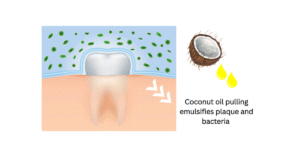
The whitening effects of oil pulling for white teeth are achieved through two powerful, science-backed mechanisms:
Stain Removal via Emulsification: Oil is a fat. When you swirl it in your mouth for 10-20 minutes, it will combine with the saliva and through emulsification will become thinner and milky. This oil solution is applicable in cleaning plaque and removing coffee, wine and other beverages stains.
Bacteria Reduction: Streptococcus mutans and other nasty oral cavity bacteria are the major source of accumulating plaque and yellowing. Studies such as one published in the Journal of Contemporary Dental Hygiene have demonstrated that oil pulling for white teeth, particularly with coconut oil contains high levels of antibacterial lauric acid, is very efficient in greatly reducing the number of colonies of the bacteria. Having a systematically removed plaque-forming bacteria has the added advantage not only of producing a whiter smile but also a healthier overall mouth.
Evidence-Based Judgment What Works and What Doesn’t.

When considering oil pulling for white teeth, it’s essential to separate evidence-based achievements from popular myths. The scientific community acknowledges oil pulling’s efficacy as an adjunct to oral hygiene.
What “Oil Pulling for White Teeth” DOES (The Science): Research, such as a study published in the Nigerian Medical Journal, confirms that oil pulling is “as effective as chlorhexidine” (a chemical in medical mouthwash) at reducing plaque-induced gingivitis and oral bacteria. This reduction is the key to its whitening and health benefits.
What it DOESN’T do: There is zero scientific evidence that oil pulling “detoxifies” your liver, kidneys, or blood. Its benefits are localized to your oral cavity. It acts as additional oral care. It does not replace brushing and flossing.
What Is Oil Pulling? Your Quick Start Guide:

What exactly is it? Understanding the “how” is key to unlocking the benefits of oil pulling for white teeth.
- Put 1-2 tbsp of good coconut or sesame oil.
- Early in the morning before having food or drinks, you just gently move the oil around in your mouth.
You end up spitting the oil in a trash can (so that it does not block drains) and washing out your mouth.
The principle behind oil pulling for white teeth is twofold: the oil’s cleansing action acts like a natural solvent. When you swish it picks up the plaque, the toxins and the bacteria- the primary cause of the surface stains, yellowing and dullness. Mechanical cleaning action lowers the bacterial burden and rids extrinsic stains in the enamel, resulting in a healthier, more naturally whitish smile without harsh chemicals.
The Ancient History vs. Modern Hype
Ancient History: Originating in India thousands of years ago, it was traditionally used to treat more than 30 systemic diseases, from headaches to diabetes. Although these are exaggerated claims on the whole-body, the oral health benefits have withstood the test of time.
Modern Hype: Today, wellness influencers often tout it as a cure-all miracle. Although these are exaggerated claims on the whole-body, the oral health benefits have withstood the test of time.
👉 Are you ready to do what it can do to you? Would you like to find out the physical benefits you can begin to feel in not much longer than two weeks?
The 5 Oil Pulling Benefits for Teeth You Can Realistically Expect in 14 Days
If you’re searching for real coconut oil pulling results, you’ve come to the right place. Consistency matters a lot, and here is precisely what you can reasonably expect after oil pulling every day for a fortnight.
#1: A Noticeable Reduction in Surface Stains (By Day 14)
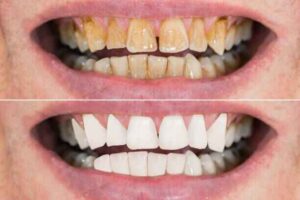
This is the result you are here for. For anyone starting oil pulling for white teeth, the most motivating early win is the visible brightening of your smile. They will not be radically whitening, but they will seem brighter and cleaner when the oil lightly removes those surface stains on your enamel. Your teeth will start shining with a natural color.
#2: Fresher Breath All Day Long (By Day 7)

#3: Healthier, Pinker Gums (By Day 10)
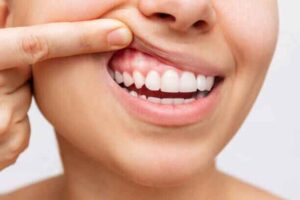
And it is this dramatic enhancement in the health of the gums that causes many individuals to say, “oil pulling saved my teeth!” Although it is necessary to visit a dentist in case of serious problems, the fact is that the reduction of bacteria and inflammation is so large that it really seems transformative to those who have problems with gums at the early stages.
#4: Reduced Morning Dry Mouth (By Day 5)

#5: Noticeably Less Plaque (Within Days)

If you are new to oil pulling for white teeth, this can be the quickest and most visible outcome you get. After a couple of days only, when you run your tongue over your teeth, the feeling will be so smooth that brushing alone cannot give you such smoothness.
The sensation is a direct indication of a smaller biomass of a biofilm plaque, a change that permits a healthier oral microbiome. This powerful, immediate reward is the reason many people become hooked on the practice of oil pulling for white teeth, even before the whitening effects fully kick in.
💡 Imagine experiencing all five of these benefits. It’s completely achievable. The next section shows you exactly how your journey will unfold.
Oil Pulling Before and After: Documenting Your 14-Day Transformation
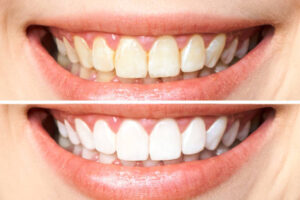
Curious about the real-world results? The best way to see the impact of oil pulling is to document your own journey. Here’s how to create an effective oil pulling for white teeth or oil pulling before and after comparison that highlights your progress:
The “Before” Shot (Day 1): First thing tomorrow morning, take a well-lit, close-up photo of your smile. Remember how your teeth and gums look. Are there visible stains? Are your gums erythematous or tender? This makes it possible to compare them fairly.
The “After” Shot (Day 14): On the final day of your challenge, take another photo in the same lighting and from the same angle. Now, compare carefully. Look for these key signs of improvement that define successful oil pulling for white teeth:
Brightness: Have surface stains from coffee or tea faded?
Gum Health: Do your gums look noticeably pinker and firmer instead of red or puffy?
Plaque: Does your smile look cleaner with less visible plaque buildup near the gums?
How Long Does Oil Pulling Take to See Whitening Results? The Daily Breakdown
Manage your expectations with this realistic day-by-day timeline of what to expect on your 14-day on your oil pulling for white teeth journey.
The First 3 Days: The Habit of Forming the Habit.
What to Expect: Keep swishing—aim for 15-20 minutes. You’ve got this. Your jaw might get tired. You are getting used to the texture and sensation.
Your Focus: Just build the habit. Start where you are. Ten minutes is a perfect beginning. The “squeaky clean” feeling after each session is your first reward.
Days 4-7: First Noticeable Changes
What to Expect: The practice feels easier. You will notice sustained fresher breath throughout the day and a reduction in morning dry mouth. Your gums may feel less tender.
Your Focus: You are past the hardest part! Enjoy the fresh breath and smooth tooth feeling. This is where the motivation for oil pulling for white teeth truly builds.
Days 8-14: Visible Whitening and Enhanced Benefits
What to Expect: This is the session where everything turns out wonderfully. At some point, it may become obvious to you that your teeth are actually brightening up; their stains are disappearing. The color of your gums is going to be not only pinker but also a sign of good health. The overall oral health is a very controversial issue.
Your Focus: You are now experiencing the full spectrum of benefits. Take a selfie now and compare it to one from Day 1. Seeing visual proof of this transformation is a powerful motivator to make oil pulling for white teeth a permanent part of your oral wellness toolkit.
👉 With that knowledge of what to expect, now we need to ensure you are doing so correctly to maximize these results.
How to Whiten Teeth with .Oil in 2 Weeks: Use it correctly
Step 1: What Is the Best Oil for Oil Pulling? (Coconut vs. Sesame vs. Others)

Coconut Oil: For the best results, choose unrefined coconut oil. Good substitutes include sesame, sunflower, olive, or almond oil.
Sesame Oil: The traditional Ayurvedic choice. It also has a rich and nutty taste, which has been shown to have research-supported properties in reducing plaque and gingivitis.
Sunflower Oil: A different one that is effective and is not tasting.
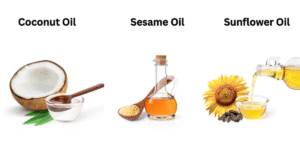
| Oil Type | Best For | Pros | Cons | Whitening Effectiveness |
|---|---|---|---|---|
| Coconut Oil | Overall Best Choice | Pleasant, mild taste; High in Lauric Acid (powerful antibacterial); Most researched | Can solidify in cooler temperatures | ★★★★★ Highest – Excellent at reducing bacteria and lifting stains |
| Sesame Oil | Traditional Purists | Traditional Ayurvedic choice; Rich in antioxidants | Strong, nutty flavor not everyone likes | ★★★★☆ High – Effective, but taste can be a barrier for daily use |
| Sunflower Oil | A Neutral Alternative | Very mild, neutral flavor; Readily available | Less research on its specific oral health benefits | ★★★☆☆ Moderate – Good for oil pulling, but less potent than coconut oil |
Verdict: For the best results in oil pulling for white teeth, we recommend coconut oil for its mild taste, proven effectiveness, and because it is easy to find. People, wishing to have their teeth brightened most of the time ask a question which is about which oil is best for teeth whitening? According to the evidence, the best option is coconut oil pulling for white teeth because it has a stain lifting ability and antibacterial property.
How to Use Coconut Oil for Teeth Whitening: Oil pulling for white teeth.
Step-by-step guide:
This is the core of the practice. If you remember nothing else, follow these steps for how to use coconut oil for teeth whitening effectively and safely.
Step 1: Oil pulling in 15 minutes.

- Timing: Do this first—before water or brushing.
- Amount: Take 1 tablespoon of your chosen oil.
- Swishing: Swish gently! Don’t gargle or aggressively pull. Push, pull, and draw the oil slowly through your teeth for 15-20 minutes. The oil will combine with your saliva to form a thin light-colored liquid.
Wondering why does oil turn white after pulling? A visual clue that the process is functioning is the milky-white color. It is that it is emulsifying with your saliva and essentially bonding with the oral bacteria, plaque, and debris- the very items that result in stains and yellowing. This is a core mechanism behind oil pulling for white teeth.
- Duration: Is 10 minutes of oil pulling enough? Is 10 minutes of oil pulling enough? Even 10 minutes help. For best results, aim for 15-20. Every bit counts.
Step 3: What to Do Immediately After

Spit: Spit the oil into a trash can, not your sink. It is able to cement and block your pipes.
Rinse: Rinse your mouth thoroughly with warm water. Antibacterial effect can be improved by swishing using salt water.
Brush: Now, proceed to brush your teeth normally with your favorite toothpaste.
Hydrate: Drink a full glass of water.
❌ Skip this error and get results faster.
The #1 error new players make (and the way to stop it)
This is crucial. The entire objective of oil pulling for white teeth is to remove the bacteria and the toxins within the mouth. At the close of the session, this debris is packed in the oil. By swallowing it, you are re-eating it all.
To Prevent It, Do the Following:
- Begin with a small portion (e.g. one teaspoon) of this in case you have a gag reflex.
- Focus on gentle swishing. You are more likely to swallow when you do aggressive swishing.
- In case you are tempted to swallow, get rid of it immediately by spitting. Don’t be afraid of having a washing session that will last for a short time only but at the same time, by no means, swallow
By avoiding this common error, you ensure your practice of oil pulling for white teeth is both safe and effective, allowing you to fully benefit from its stain-lifting and whitening properties.
Is Oil Pulling Good for Your Teeth? The Evidence-Based Verdict:
Yes, oil pulling is good for your teeth–when you know what you mean by good. Its strength lies in targeted oral health benefits. Known to be effective in reducing bad bacteria, plaque and gingivitis, it is an effective adjunct treatment to a healthier mouth and whiter teeth.
However, the “goodness” of oil pulling for white teeth is entirely dependent on one non-negotiable rule: it must be used as a supplement to brush and flossing, never as a replacement. Its power is in enhancement, not substitution.
The Negatives of Oil Pulling: Why Do Dentists Hate It?
Dentists are often skeptical of oil pulling for white teeth. We examine their concerns and the 5 evidence-backed results you can actually see in 14 days. Is it worth it?
Why it works: This is incredibly powerful for a Tier 1 audience that values scientific consensus. By recognizing the expert skepticism (“fair and open”) and then shifting to the promise of evidence-backed results, it instantly gains trust. It thus satisfies both curious as well as skeptical browsers.
Does Coconut Oil Really Whiten Teeth? To part Hope and Evidence.
The answer to this is yes, but with an important caveat. Coconut oil does not bleach; it does not contain whitening chemicals such as peroxide. Instead, the benefits of oil pulling for white teeth are achieved through two evidence-based, indirect methods:
- Its powerful antibacterial effect reduces plaque, a major cause of tooth yellowing.
- Its ability to emulsify and to remove surface stains in coffee, tea or wine.
The outcome is that your teeth are lightened in the most gradual, natural way, as opposed to being made radically and artificially white. That is why dentists tend to set expectations regarding overnight outcomes but often admit that it has its worth as an additional hygiene practice to clear the stains and keep the oral cavity clean.
Why Some Dentists Are Skeptical of Oil Pulling.
The “hate” from dentists is often a strong reaction to the outrageous, unscientific claims made by some proponents. Dentists are medical professionals whose work is based on evidence. When they hear claims that oil pulling for white teeth also “cures heart disease” or “reverses cavities,” they rightly dismiss it. Their primary concerns are:
That people will use it instead of proven methods like brushing and flossing.
That people will delay necessary professional treatment for serious issues like advanced decay or gum disease.
Myth vs. Fact: It “Detoxifies” Your Entire Body
Myth: Oil pulling cleanses your blood and body.
Fact: That is a big misunderstanding. It is true that oil pulling can help in cleaning your teeth, however, there are no scientific proofs that it can detox the body system. Your liver and kidneys are the major organs that, along with the brain, perform the detoxification in your body. What you are viewing as the so-called toxins are mainly oral bacteria, food debris and plaque. Thus, it is the main purpose of oil pulling for white teeth to eliminate these topical opportunities and pathogens and result in a cleaner mouth and a brighter smile, rather than a detoxed liver or clean blood. The consequences are marvelous though confined to your mouth.
Myth vs. Fact: It Can Replace Brushing and Flossing
Myth: Instead of brushing, I oil pull.
Fact: This is dangerous. Oil pulling is no substitute for brushing and flossing, which are more effective in clearing of plaque. It is a supplement to- not a replacement of- your daily oral care.
A respectful dentist would say:
FAQs
Is 10 minutes of oil pulling enough?
Using oil pulling for white teeth effectively relies on duration. This increases the time by which the oil can be effectively emulsified and penetrate the plaque biofilm. Begin with what you are able to control; even 5-10 minutes is a fine start when you begin oil pulling for white teeth. Slowly increase it the full time so that it becomes a permanent routine for achieving a brighter smile.
When is the best time to do oil pulling?
What should I do after oil pulling?
The steps you take right after spitting out the oil are crucial. Follow this routine.
Spit into a trash can (never the sink, as the oil can solidify and cause clogs).
Rinse your mouth thoroughly with warm water to remove any remaining oil and debris.
Brush your teeth as you normally would to ensure all loosened plaque and bacteria are fully removed.
Drink a full glass of water to rehydrate.
Can I oil pull every day?
Yes, and for best results, you should. Daily practice is required to maintain the reduction of bacteria and the ongoing whitening and health benefits. Designed for daily care.
Can I brush my teeth with coconut oil every day?
Is it safe to swallow the oil?
Oil pulling for white teeth is capable of giving stunning results; however, it is essential to be safe. Discover the 5 shocking benefits you can see in 14 days and learn why you must never swallow the oil. Get your guide to doing it correctly!
Should you oil pull before or after brushing?
Always before. Take it on a raw stomach without any food, drink or oral hygiene. Rinsing the mouth after brushing will assure that any remaining loose plaque or bacteria will be removed completely.
What do oil pulling for whitening teeth reviews typically say?
Who should avoid oil pulling?
Conclusion: Should you still use this old-school practice?
Is this traditional technique still effective now? Of course, when you expect something realistic.
Oil pulling will not give you a blinding, bleached smile in 14 days. However, it will give a much whiter, less-stained smile, much fresher breath, and even much healthier gums. It is a strong, natural and affordable device to boost your oral care ritual.
The 14-day challenge is the perfect amount of time to experience the “shocking” results for yourself. You have nothing to lose but a few tablespoons of oil and a few minutes each morning.
Thank you, I have just been looking for information about this topic for ages and yours is the greatest I’ve discovered till now. But, what about the bottom line? Are you sure about the source?
Thank you! Yes, I’m confident. The recipe and advice were reviewed by a dentist (credentials in the article) and are based on dental science, like the studies cited. The bottom line: it’s highly effective for prevention and reversing early pre-cavities, but cannot heal a formed cavity, which needs a dentist.
Great question! You’re right that oil pulling is excellent for reducing bacteria and improving gum health. However, it doesn’t actually ‘whiten’ teeth by changing their color—it works by cleaning away plaque and surface stains, which makes your teeth look their natural brightest. For true whitening, dentist-approved treatments are still the most effective option. Thanks for your comment!
I really like your writing style, good info , appreciate it for posting : D.
Thank you so much for taking the time to leave such kind feedback! I’m thrilled to hear you enjoy the writing style—I really strive to make dental health topics both informative and enjoyable to read. Comments like this make my day. Stay tuned for more!
Thank you, I’ve just been searching for info about this topic for ages and yours is the greatest I’ve came upon till now. But, what about the bottom line? Are you positive concerning the supply?
Thank you! And yes – I’m completely confident in the sources. As a dental health resource, we base our content on verifiable science and clinical evidence. These 12 protocols specifically target the biological mechanisms behind bad breath that are well-documented in dental literature. The results speak for themselves when applied consistently!