
Can coconut oil whiten teeth? Ancient oil of coconut is not capable of brightening teeth. It removes plaque, so teeth look cleaner and brighter. Removes plaque to make teeth look cleaner and brighter. Want to remove severe stains? A dentist can do it quickly and effectively. There are two real ways of getting whitened: at the dentist chair or in the tested whitening toothpastes.
Introduction

Coconut oil cleans teeth; it does not whiten them. This is the definitive answer from a dental perspective for anyone wondering if coconut oil whitens teeth naturally and understanding why is crucial to your oral health. As a dental professional, I see patients misled by this common myth every week. Many dentists, in fact, when asked about oil pulling, acknowledge that its advantages are generally exaggerated for whitening but agree that it might be used as a complementary therapy.
While swishing with coconut oil (a practice known as oil pulling) offers notable antimicrobial benefits, many people try oil pulling for whitening teeth specifically, which is a fundamental misunderstanding.
Your natural tooth color won’t get lighter by using this product in the same way as if you take professional whitening treatments. So why does the myth about coconut oil whiten teeth persist so stubbornly? This manual helps to debunk the myths with the help of science.
You will discover the three real benefits of coconut oil pulling for your oral health, the significant risks of popular DIY whitening mixes, and—most importantly—the dentist-approved methods that genuinely deliver a brighter, whiter smile. If you are considering oil pulling for whitening teeth, you need to read this first.
The #1 Myth About Coconut Oil and Whitening (The “Big Myth”)
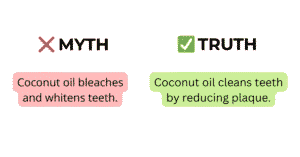
To be direct, we need to discuss the obvious challenge. A big myth is that coconut oil whitens teeth by bleaching them white. It does not work the same way as proven whitening treatments.
Coconut oil gets rid of plaque and surface stains, thereby making your natural teeth appear cleaner. This is why many people ask, ‘Does coconut oil whiten teeth?’—the truth is, the tooth itself has not been lightened; it has simply been well cleaned. Considering it as a whitener is a misconception over its action. This leads us directly to its first surprising truth.
Surprising Truth #1: It is a Master Plaque Remover; it is not a Whitener.

The best reason to try oil pulling is that it’s great at fighting the bacteria that cause plaque and bad breath. This is its true superpower and the foundation for its use in coconut oil for gum health.
Many people use coconut oil to whiten teeth because it’s great for fighting germs and calming inflammation. Teeth and gums can be cleaned off bacteria by oil pulling.
A study published in the Journal of Contemporary Dental Practice found that oil pulling with coconut oil was as effective as chlorhexidine mouthwash in reducing levels of Streptococcus mutans, the primary bacterium responsible for plaque and tooth decay. Many people think coconut oil whiten teeth because it scrubs off the dull surface layer, revealing a cleaner, brighter layer of enamel underneath.
That is basically how the story spread that coconut oil whitens teeth naturally. This significant reduction in plaque buildup is what creates the illusion of whitening. Your teeth look whiter when they are clean. Plaque is that sticky layer which sticks to teeth and makes them look dirty.
Coconut Oil vs Whitening Toothpaste: A Direct Comparison
| Aspect | Coconut Oil | Hydrogen Peroxide (Standard Whitener) |
|---|---|---|
| Primary Action | Antimicrobial / Cleansing | Oxidizing / Bleaching |
| Target | Plaque biofilm (bacteria) | Stain molecules within enamel |
| Effect on Color | Removes surface debris, reveals natural color | Breaks down deep stains, lightens natural color |
| Scientific Support | Strong for reducing bacteria | Overwhelming for whitening |
Surprising Truth #2: The Real Benefit is Gum Health, not a Whiter Smile
Building on its antimicrobial power, the second and perhaps more valuable truth is coconut oil’s profound impact on gum health. Coconut oil doesn’t disinfect stains, this is actually the mechanism by which the teeth can be whitened with coconut oil: it controls the production of plaque, which makes the teeth look yellow. Plaque bacteria are the cause of gum disease. The most effective method of preventing gum problems is to have the plaque under control.
This is not just anecdotal; research, including a study published in the Journal of Clinical and Diagnostic Research, supports the efficacy of oil pulling in improving markers of gum health. Focus on health, not just Hollywood white. Strong gums are the foundation of a healthy smile and can even help reverse receding gums naturally.
How long will it take for teeth to be whitened by coconut oil? (The Real Timeline)

Given that the ‘whitening’ effect from using coconut oil whiten teeth is actually just better cleaning, the timeline for seeing a difference is not instantaneous. You should not expect to see a change after one or two uses.
1-2 Weeks: With consistent daily use, you may begin to notice your teeth feeling incredibly smooth and looking less dull because plaque is not building up as effectively.
3-4 Weeks: This is when most people asking, ‘Can coconut oil whiten teeth?’ Might observe a slight brightening effect. Your teeth may appear to be their “natural” shade, obscured by plaque and recent surface stains.
Coconut Oil Whiten Teeth Before and After: The Realistic Timeline
You will not find a “before and after” showing teeth shifting several shades whiter. Many people ask, ‘Can coconut oil whiten teeth?’ It is not true that polishing will bleach enamel as it is not powerful enough to do so. On the other hand, a real “before and after” effect is indeed there – it is just that the focus is on the improvement of oral health rather than merely the color.
| Aspect | Before (With Plaque Buildup) | After (With Consistent Coconut Oil Use) |
|---|---|---|
| Plaque & Bacteria | High levels of plaque biofilm harboring bacteria. | Significant reduction in plaque and harmful bacteria. |
| Tooth Appearance | Teeth may appear dull, yellow-ish, or stained. | Teeth appear cleaner, smoother, and their natural shade is revealed. |
| Gum Health | Gums may be red, inflamed, and prone to bleeding. | Gums are healthier, pinker, and less inflamed. |
| Surface Feel | Teeth may feel fuzzy or rough due to plaque film. | Teeth feel exceptionally smooth and clean to the tongue. |
| Overall Benefit | A mouth environment prone to decay and gingivitis. | A cleaner, healthier oral environment that supports overall wellness. |
The Takeaway: Manage your “before and after” expectations. The most profound results aren’t necessarily what you see in the mirror, but what you feel: healthier gums, a cleaner mouth, and the knowledge that you’re effectively reducing your risk of cavities and inflammation.
For a visual transformation in tooth color that coconut oil whiten teeth methods can’t provide, you will need to explore the dentist-approved whitening alternatives we detail later in this article.
How to Use Coconut Oil for Teeth Whitening
How to Oil Pull using Coconut Oil: A Stepwise Guide
The most recommended and researched method for those wanting to use coconut oil whiten teeth is oil pulling.
Measure: Get about 1-2 tablespoons of coconut oil. It can be either solid or liquid.
Swish: Put it in your mouth and swish around slowly while you push and pull it through your teeth. Do not swallow it.
Duration: Keep going for 15-20 minutes. The oil will get combined with saliva and will become light.
Dispose: Spit the oil into a trash can (not the sink, as it can solidify and clog pipes).
Rinse: Rinse your mouth thoroughly with warm water.
- Brush: Keep up with your brushing and flossing schedule every day.
Best practice: For the best results if you’re trying to use coconut oil to whiten teeth, do this first thing in the morning before eating or drinking.
Brushing with Coconut Oil: Pros and Cons

Pros: Can be a way to apply oil directly. Some find the texture pleasant.
Cons: It is not an effective replacement for toothpaste.
Verdict: If you want to try coconut oil whiten teeth, use a tiny amount on top of your toothpaste, but do not replace toothpaste with oil.
What is the Best Coconut Oil for Teeth Whitening?
The best type to use if you’re trying to coconut oil whiten teeth is organic, extra-virgin, cold-pressed coconut oil. This treatment retains oil in its natural form, remaining lauric acid within, and devoid of arbitrary chemicals and additives one would not wish to swish around in their mouths for a good 20 minutes.
How to Whiten Teeth with Coconut Oil and Turmeric? (Reasons to Avoid Coconut Oil)
This is a popular, yet highly controversial DIY recipe often tried by those looking to coconut oil whiten teeth. Turmeric is not only a natural anti-inflammatory but also a potent natural dye. There is a significant risk that the turmeric particles could become lodged in micro-abrasions or cracks in your enamel or along the gum line, leading to yellow staining. Well, most dental professionals advise against it due to the high risk that it poses.
Is Oil Pulling Safe? Vital Precautions for You to Be Aware Of
For the majority of adults curious about coconut oil whiten teeth methods, the practice of oil pulling is basically harmless if employed correctly. It should be said, however, that like any oral health practice, there are significant precautions to understand at which point you can end up doing more harm than good. Now, let us list the key safety considerations.
1. The Choking Hazard: Never Swallow
This is, by far, the most important rule. The swishing action draws bacteria, toxins, and plaque from your mouth to the oil. You must not swallow this mixture. You must not swallow this mixture. This introduces those dangerous elements into one’s digestive system through swallowing. In addition, excessive swallowing of oil can cause stomach upset or diarrhea.
2. The “Purging” Effect and Initial Discomfort
When you first start oil pulling, you may experience what is known as a “healing crisis” or detox reaction. One of the reasons is that the fast killing of bacteria can lead to the temporary occurrence of symptoms such as:
A stuffy nose or sinus drainage
Headaches
Mild nausea
These signs are temporary and will eventually fade as your mouth bugs get used to them. If they stick around, cut the pull meet time. Or halt for a day or two.
3. Who Should Avoid Oil Pulling (Or Consult a Doctor First)
Children: Not recommended for young children due to the high risk of swallowing and choking.
Those with Oil Allergies: Obviously, if you have a known allergy to coconut oil or other oils used, avoid this practice.
Individuals with Reflex Issues: Those with a strong gag reflex may find it difficult to swish for the recommended duration.
People with Existing Dental Work: If you have extensive dental work, crowns, fillings, or are undergoing active treatment, it’s wise to consult your dentist first to ensure oil pulling is appropriate for you.
4. It is a Supplement, not a Replacement
The top safe risk is the urge to swap proof-led tooth care with oil pulling. Oil pulling must never replace brushing with fluoride toothpaste and flossing. These stop holes in teeth & gums. Use oil pulling as an extra, not a swap.
Final Safety Verdict: Using coconut oil to whiten teeth is a low-risk practice if you follow the rules: don’t swallow, don’t replace your core routine, and listen to your body. If you don’t know, ask your tooth doc. Find out from your health plan.
Coconut Oil & Baking Soda: Safe Whitening Combo or Just a Myth?
People are always reposting the recipe for whitening teeth with coconut oil and baking soda. Don’t ever mix these two under any circumstances, even if people call it a traditional method of treatment. Your dentist would be very angry and disappointed. I mean it, just do not do it. I really would not even try it.
Too much Scrub? The Truth About Abrasives and Your Teeth.
The fundamental problem with using baking soda for whitening teeth with coconut oil and baking soda is enamel abrasion. Go easy on baking soda for brushing your teeth. Sure, it is “natural,” but that stuff is basically sandpaper in disguise.
Scrub with it all the time in your quest to coconut oil whiten teeth, and yeah, your pearly whites might end up not-so-pearly—just worn-down enamel begging for mercy. Honestly, you want your teeth clean, not filing them down like you are making a woodworking project.
The critical fact to remember is that tooth enamel does not regenerate. So, you know this can not go back. So, please be sure. It makes a big chain of bad things:
Permanent Yellowing: As the protective white enamel thins, the naturally yellow dentin layer underneath becomes more visible, making your teeth look permanently more yellow—the exact opposite of your goal.
Intense Sensitivity: Worn enamel exposes the dentin, which is directly connected to the nerve of the tooth, leading to sharp pain with hot, cold, or sweet foods and drinks.
Higher Cavity Risk: Thinner enamel is weaker enamel, making your teeth more susceptible to decay.
Using a mix for whitening teeth with coconut oil and baking soda might give a short-term feeling of extreme smoothness (because it’s abrasively scrubbing the surface), but it actively jeopardizes the long-term health and appearance of your smile.
Keep your teeth strong to guard your smile. For a brighter grin, look at the top dentist picks, including natural methods like coconut oil whiten teeth. We list them here.
Is it safe and okay to use coconut oil to brush my teeth every day?
Yes, using coconut oil to whiten teeth is safe for daily use as a rinse before you brush. Consider it as an additional instant step in your mouth care routine. Yet, it should not be used as a substitute for brushing with fluoride toothpaste and flossing. See this as a small tweak, not a key bit of your first plan.
How Coconut Oil Fits into a Modern Oral Health Routine
Coconut oil’s cool and all but let us not kid ourselves—using coconut oil whiten teeth is not some magical fix. If you really want to keep that champers in top shape, here’s what’s actually on the dental menu these days:
Oil Pull: (Optional) For 15-20 minutes in the morning.
Brush: For two minutes, twice daily, with a fluoride or nano-hydroxyapatite toothpaste.
Floss: Thoroughly, once per day.
Rinse: With an alcohol-free mouthwash if desired.
Coconut oil really could be considered step 0. It should, in no way, sacrifice steps 1 and 2.
Dentist-Approved Natural Whitening: Safe & Effective Alternatives
If your goal is genuine whitening, and you’re wondering how to make teeth whiter naturally and effectively, it’s crucial to understand that “natural” doesn’t have to mean “unproven”. This is especially true for trends like using coconut oil to whiten teeth. The best ways are those that get help from teeth care facts. They tend to use safe, real-based rules safely.
Whitening Toothpastes: Look for the ADA Seal of Acceptance and ingredients like hydrogen peroxide.
At-Home Whitening Kits: Custom trays from your dentist or reputable over-the-counter kits with fitted trays.
In-Office Professional Whitening: The fastest, most dramatic, and supervised results using high-concentration bleaching agents.
Professional Hygiene Appointments: Regular cleanings to remove surface stain and tartar.
FAQ: Ask Your Coconut Oil Things. A Tooth Doc Will Fix It.
How long would it take for coconut oil to brighten teeth?
Does coconut oil whiten teeth? As it does not whiten, it cleans. Within three to four weeks of regular use, you might notice a minor increase in brightness of your teeth due to less plaque accumulation.
Does coconut oil help you whiten your teeth?
Which oil is best for teeth whitening?
How does coconut oil whiten teeth?
It’s a common myth that coconut oil whitens teeth by bleaching them. One of the main things which will keep your teeth clean and white is preventing plaque buildup.
Does coconut oil whiten teeth instantly?
No, using coconut oil to whiten teeth is not an instant process. It does not whiten instantly.
Does coconut oil whiten teeth overnight?
No. That is wrong. The idea that coconut oil whiten teeth in a single night is a common misconception.
How to whiten teeth using coconut oil and turmeric?
Conclusion:
So, does coconut oil whiten teeth? Think baking soda whitens teeth? Science says it is a misconception. It is a fantastic cleaner, but it does not have the ability to change the color of your teeth. This brings us to the core question many ultimately have: does oil pulling work? Actually, that’s not what it’s for.
Oil pulling works remarkably well for what it is actually proven to do: significantly reducing harmful oral bacteria, improving gum health, and creating a cleaner oral environment. While many people try it hoping to coconut oil whiten teeth, the real benefit is that it can lead to a perception of a brighter smile by revealing your teeth’s natural, plaque-free color.
Love using coconut oil to whiten teeth for oral health? Great! For a white grin, see your dentist. Use tried & true whiten goods, too. That is still the best way. Love a natural approach to a healthy smile? Share your experiences below! For expert tips on whitening without the harsh stuff, we have got a guide for that.
Way cool, some valid points! I appreciate you making this article available, the rest of the site is also high quality. Have a fun.
Thank you for the kind words and for checking out our other content! We work hard to maintain quality across all our articles, so your feedback is especially rewarding.