
You just finished a sweet treat, and now you’re wondering: Detox Your Mouth Naturally After a Sugary Meal before the damage sets in? The answer is not to panic‑brush or reach for an alcohol‑based mouthwash – both can actually make things worse. In fact, you can naturally detox your mouth after eating something sugary by neutralizing acids, starving harmful bacteria, and protecting your enamel in just three fast dentist-approved steps. This article gives you exactly those steps, starting right now.
What makes it so pressing? Every time you indulge in sugar, the cavity-causing bacteria in your mouth such as Streptococcus mutans will generate acids that will break down the enamel of your teeth for about 20-30 minutes. If you do nothing, that acid bath repeats with every sugary sip or snack. But here’s the good news: you can Detox Your Mouth Naturally After a Sugary Meal immediately using simple, natural techniques that take less time than scrolling social media. In fact, understanding how to stop sugar from damaging teeth naturally is the first step toward a cavity‑free smile.
You might be asking:
Can I clean my mouth without brushing right away?
What actually stops acid from harming my teeth?
Are there quick, natural remedies that dentists trust?
What kills cavity causing bacteria in the mouth instantly?
This guide answers all of these questions with science‑backed, practical solutions. Unlike generic advice that only masks the problem, the methods here target the root cause – bacterial acid production – and help you Detox Your Mouth Naturally After a Sugary Meal by rebalancing your oral pH within minutes. You’ll also discover simple steps to detox your mouth without brushing – perfect for on‑the‑go moments.
Here’s what you’ll discover in this article:
The one immediate action that dilutes sugar and raises pH faster than anything else.
Why xylitol is a dentist’s secret weapon to starve cavity bacteria.
A 30‑second kitchen ingredient rinse that neutralizes acid without damaging enamel.
Natural ways to remove sugar from teeth after eating that take less than a minute.
Best homemade mouthwash for enamel repair using common kitchen ingredients.
By the time you finish reading, you will have a clear, 3‑step protocol to Detox Your Mouth Naturally After a Sugary Meal – no harsh chemicals, no waiting, no guesswork. Your enamel will thank you. Now, let’s get started.
Remember to bookmark this page or even better, add it to your phone’s home screen to have the guide always at hand for the moments that you will desire a sweet. Next time all you will have to do is to open the guide and let the 3 Ways to Detox Your Mouth Naturally After a Sugary Meal be revealed to you. Your enamel will thank you.
Why the First 30 Minutes After Sugar Are Critical for Your Enamel
You eat sugar, rightly or wrongly, and your mouth bacteria will start working. The major villain, Streptococcus mutans, is a type of bacteria that takes in sugar (or ‘eats’ it) and then produces (or ‘poops out’) acid. This causes the level of pH in your saliva to drop very rapidly from the neutral 7.0 to below 5.5. That’s the tipping point where your tooth enamel begins to demineralize as calcium and phosphate minerals are leeched out of your teeth.
This connection between sugar consumption and enamel damage is well-documented; the American Dental Association’s official diet and oral health resource explains how dietary sugars drive this acid attack and increase cavity risk.

This acid attack will continue for 20 to 30 minutes after every sugar exposure. As a result, if you are continually munching, or enjoying sugary soft drinks, your teeth will hardly have any opportunity to repair themselves. Indeed, saliva helps in neutralizing acids and enamel restoration by remineralization, but it requires approximately 30 minutes to 1 hour of low acid environment to perform its function completely. To learn more about the food that help remineralize enamel naturally, see our dentist-approved guide. The constant presence of sugar causes the mouth to constantly be exposed to acids, leading to the gradual degradation of enamel, the creation of white spots, and ultimately the occurrence of caries. That’s why learning how to stop sugar from damaging teeth naturally is so urgent.
The good news: You can Detox Your Mouth Naturally After a Sugary Meal within the first few minutes after sugar. The three‑step protocol below is designed to do exactly that – quickly raise pH, remove sugar residues, and starve the bacteria that cause the damage.
Right now, think about your last sugary snack. Did you Detox Your Mouth Naturally After a Sugary Meal? If not, commit to using this protocol next time. Your future self will thank you.
How to Clean Your Mouth After Eating Sweets (The 3‑Step Protocol)
This is the heart of the article. Follow these three steps in order, immediately after finishing any sugary food or drink. The entire routine takes less than three minutes and will help you Detox Your Mouth Naturally After a Sugary Meal. These are among the most effective simple steps to detox your mouth without brushing that dentists recommend.
Step 1 – Rinse With Water (How to Remove Sugar From Mouth Instantly)

What to do: Grab a big gulp of plain water at room temperature. Swishing it with a lot of energy for 30 seconds around all the teeth, along the gum line, and on the tongue. And then spit it out. Repeat once more if desired.
Why it works: Water is the simplest and most effective immediate rinse. It physically dilutes and washes away free sugar particles that would otherwise feed bacteria. It also helps raise the oral pH toward neutral because water has a neutral pH of 7.0. Unlike sugary or acidic drinks, water does not add to the acid load. This is one of the fastest natural ways to remove sugar from teeth after eating.
The science: A study in the Journal of the American Dental Association found that rinsing with water after a sugary drink reduced the acidogenic potential by up to 50% compared to doing nothing. Water also stimulates a mild saliva flow, which contains bicarbonate – a natural buffer.
Pro tip: Don’t use sparkling water or flavored seltzer for this step. Lots of sparkling waters have a pH of 3, 4, which is acidic and if you use such water, your enamel might get eroded even more. You should only drink plain tap or filtered water.
Keep a reusable water bottle with you at all times. After every sugary treat – even a small candy – take a quick water rinse. That simple habit will Detox Your Mouth Naturally After a Sugary Meal effortlessly.
Step 2 – Chew Xylitol Gum (What Kills Bacteria in the Mouth Instantly)
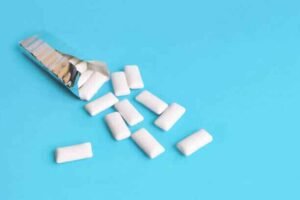
What to do: Chew a single piece of sugar-free gum which has xylitol as its first or second ingredient really carefully for 5-10 minutes only. Don’t swallow it. Just spit it out when the taste dies.
Why it works: Xylitol is kind of a sugar that is naturally produced. It has a chemical configuration quite different from those sugars our parents gave us (table sugar, corn syrup), because it belongs to the class of sugar alcohols. Sugar alcohols are actually closer to complex carbohydrates than they are to the sugars normally seen.
While sugar is not taken up normally, xylitol rigs the absorption mechanism to SUGAR COATED landmines. Under a SUGAR-COATED flag, xylitol marches into bacterial villages and cantonments and makes like Taylor and starts blowing up bacteria to the high heavens. Chewing xylitol gum is a powerful way to Detox Your Mouth Naturally After a Sugary Meal and directly answers the question: what kills cavity causing bacteria in the mouth instantly – the answer is xylitol.
The science: A 2023 meta‑analysis in Caries Research reviewed 10 randomized controlled trials and found that chewing xylitol gum three to five times daily reduced cavity risk by 30–50%. The consumption of a meal containing sugar can block acid production for half an hour to an hour.
Another study published in 2025 in BMC Oral Health. Systematic review showed that xylitol gum significantly reduces the levels of mutans streptococci when compared with sorbitol gum. In six out of ten experiments plaque was decreased, and in three out of five carries. The results indicate that besides using fluoride toothpaste, consumption of xylitol gum can help reduce cavities in children and adults.
What to look for: Read labels carefully. Many “sugar‑free” gums contain sorbitol, mannitol, or aspartame – these do not have the same bacteria‑starving effect as xylitol. Look for brands like PUR, Spry, or Epic Dental. Aim for at least 1 gram of xylitol per piece.
Important: Xylitol is extremely dangerous for dogs, therefore do not allow your pet to eat any gum, but for humans it is safe, and is indeed very beneficial to dental health.
Buy a pack of xylitol gum today and keep it in your bag, car, or desk drawer. After every sugary meal, chew one piece to Detox Your Mouth Naturally After a Sugary Meal. It’s a small investment for long‑term enamel protection.
Step 3 – Use a 30‑Second Baking Soda Rinse (Natural Oral Detox Solution)
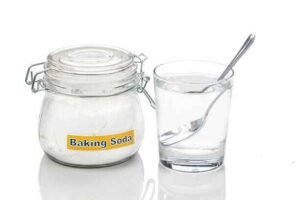
What to do: Mix 1/2 teaspoon of baking soda (sodium bicarbonate) into 1 cup of warm water. Stir until dissolved. Swish the solution in your mouth for 30 seconds, then spit it out. Do not swallow. Do not rinse with plain water afterward – leave the alkaline residue on your teeth.
Why it works: Baking soda is highly alkaline (pH ~8.3). It instantly neutralizes the acids produced by bacteria, raising your mouth’s pH back to a safe zone where remineralization can occur. It also helps break down the sticky matrix of plaque, making it easier for saliva to wash away debris. This rinse completes your effort to Detox Your Mouth Naturally After a Sugary Meal and is a fantastic best homemade mouthwash for enamel repair. If you prefer a ready‑to‑use option, explore 7 Best Natural Mouthwashes That Actually Work (No Harsh Chemicals!) – all are free of alcohol and low‑pH ingredients.
The science: A 2021 study in the Journal of Clinical Dentistry found that a baking soda rinse increased salivary pH significantly more than water alone for up to 30 minutes. This extended alkaline window gives your enamel a chance to begin repairing microscopic damage.
Pro tip: You can pre‑mix a small jar of baking soda and keep it in your bathroom or office. For travel, carry a small spice jar with the powder and add water when needed.
Mix a batch of baking soda rinse tonight and store it in a sealed bottle. Use it after your next sugary snack – you’ll Detox Your Mouth Naturally After a Sugary Meal and feel the difference instantly.
Why Should We Rinse Our Mouth After Every Meal? (The Science of pH)

You’ve heard the advice: “Rinse after every meal.” But is there real science behind it? Absolutely. Rinsing is one of the simplest ways to Detox Your Mouth Naturally After a Sugary Meal or any meal. It’s also an excellent natural mouth rinse for acidity after eating sugar because it quickly dilutes acids.
Every time you eat – whether it’s a full meal or a small snack – your mouth’s pH drops. Carbohydrates, sugars, and even some proteins feed oral bacteria, which produce acid as a byproduct. This acid attack can last 20–30 minutes. If you eat three meals plus two snacks, your teeth could be under acid attack for over two hours per day.
Rinsing with plain water immediately after eating does two critical things:
Dilutes and removes food particles – less food means less fuel for bacteria.
Accelerates pH recovery – water helps wash away acids and brings in fresh saliva.
A 2019 study in Clinical Oral Investigations showed that a 30‑second water rinse after a sugary drink reduced the area of enamel demineralization by 40% compared to no rinse. That’s a significant difference for a 10‑second habit.
But timing matters. If you rinse with water immediately after eating, you get the full benefit. If you wait 10–15 minutes, the bacteria have already started producing acid, and some damage may have already occurred. That’s why the first step in our protocol is immediate – don’t delay.
Set a reminder on your phone for 2 minutes after every meal. Use that reminder to take a water rinse. Within a week, it will become an automatic habit that helps you Detox Your Mouth Naturally After a Sugary Meal every time.
What to Avoid Immediately After a Sugary Meal (Don’t Brush Too Soon)
Many people’s first instinct after eating sugar is to brush their teeth. This is a mistake – and it can actually harm your enamel.
Here’s why: After you eat sugar, the acid produced by bacteria temporarily softens the outer layer of your enamel. If you brush within 30 minutes, you are scrubbing away this softened mineral layer, leading to irreversible enamel loss. Over time, this causes tooth sensitivity, yellowing (as thinner enamel reveals the darker dentin underneath), and increased cavity risk. Brushing too soon cancels your effort to Detox Your Mouth Naturally After a Sugary Meal.
What to do instead: Follow the 3‑step protocol above – water rinse, xylitol gum, baking soda rinse – and then wait at least 30 minutes before brushing. This gives your saliva time to neutralize acids and begin remineralizing the enamel surface.
Other things to avoid:
Alcohol‑based mouthwash: Dries out your mouth, reducing saliva flow. Less saliva means slower acid neutralization.
Lemon water or apple cider vinegar rinse: These are acidic and will worsen the damage.
Sucking on mints (even sugar‑free): Many contain citric acid or other acids that lower pH.
Grazing on more sugar: Every additional sugar exposure resets the 30‑minute acid clock.
If you currently brush immediately after eating sweets, stop today. Change your routine: do the 3‑step detox first, then brush after 30 minutes. That’s how you truly Detox Your Mouth Naturally After a Sugary Meal without harming enamel.
Rinse Your Mouth After Every Meal: True or False? (Myth Busting)

Answer: True – with an important clarification.
Rinsing with plain water after every meal is a scientifically sound, beneficial habit. It reduces food debris, dilutes acids, and supports saliva’s natural cleaning action. In fact, it’s one of the easiest ways to Detox Your Mouth Naturally After a Sugary Meal or any meal. There are even foods that naturally clean your teeth while you eat, such as apples, carrots, and celery – but water rinsing is the fastest method.
However, rinsing with mouthwash after every meal is not recommended. Many commercial mouthwashes contain alcohol, artificial flavors, and low pH that can actually increase dryness and acidity. Even “natural” mouthwashes with essential oils should be used only once or twice daily, not after every meal.
The myth: Some people believe rinsing washes away “good” bacteria. In reality, the vast majority of oral bacteria are either neutral or harmful. The beneficial bacteria (e.g., some Streptococcus salivarius strains) are firmly attached to oral tissues and are not easily rinsed away. A water rinse does not disrupt the healthy microbiome.
The bottom line: Rinse with water after every meal. Reserve therapeutic mouthwashes for specific situations (e.g., after gum surgery or as prescribed by your dentist).
Next time someone tells you rinsing is unnecessary, share this article. And for yourself, commit to the water rinse habit starting today. It’s the simplest way to Detox Your Mouth Naturally After a Sugary Meal without any special products.
How to Detox After Eating a Lot of Sugar (Emergency Action Plan)
What if you’ve already eaten a large amount of sugar – say, a whole dessert, a sugary coffee drink, or a bag of candy? Don’t panic. Follow this emergency action plan to Detox Your Mouth Naturally After a Sugary Meal even when you’ve overdone it:
Immediate water flush (30 seconds) – Rinse vigorously with water. Spit and repeat two more times.
Xylitol gum (5–10 minutes) – Chew one piece of high‑xylitol gum. If you don’t have gum, chew a xylitol mint or lozenge.
Baking soda rinse (30 seconds) – Mix and swish as described in Step 3.
Wait 30 minutes – Do not brush. Let saliva do its job.
Drink water – Sip water slowly over the next hour to keep pH neutral.
Eat a piece of cheese or nuts – Hard cheese and almonds provide calcium and phosphorus and help raise pH.
If you have no access to anything but water: Swish with water every 15 minutes for an hour. This will still help you Detox Your Mouth Naturally After a Sugary Meal, though less effectively than the full protocol. Remember, even chewing on foods that naturally clean your teeth while you eat like raw apple slices can help if you have nothing else.
Create a small “emergency kit” – a travel bottle of water, a pack of xylitol gum, and a small container of baking soda. Keep it in your bag or car. You’ll never be caught off guard and can always Detox Your Mouth Naturally After a Sugary Meal.
What Is the 3‑3‑3 Rule for Teeth? (And Why Our 3 Steps Are Better)

You may have heard of a “3‑3‑3 rule” for teeth floating around social media. Some claim it means: 3 minutes of brushing, 3 times a day, 3 minutes after eating. This is not a standard dental recommendation and has no scientific backing.
According to the American Dental Association (ADA), you should brush your teeth with fluoride toothpaste for two minutes twice a day. You should also floss your teeth once a day and visit the dentist on a regular basis. There is no credible “3‑3‑3 rule.” Instead, use our protocol to Detox Your Mouth Naturally After a Sugary Meal. Many people also ask can you rebuild tooth enamel with diet alone – the answer is yes, with consistent intake of minerals and our 3‑step detox, you can support natural remineralization.
Why our 3‑step protocol is better:
| Their vague “3‑3‑3 rule” | Our evidence‑based 3 steps |
|---|---|
| No specific actions | Step 1: Water rinse |
| No timing guidance | Step 2: Xylitol gum |
| No scientific citations | Step 3: Baking soda rinse |
| Ignores acid neutralization | Targets pH and bacteria directly |
Our protocol is backed by dental research, uses readily available items, and takes less than three minutes. It is designed specifically for the post‑sugar window – not generic brushing advice. Follow it every time you Detox Your Mouth Naturally After a Sugary Meal.
Forget the internet myths. Follow our 3‑step protocol instead – it’s simple, fast, and dentist‑approved for anyone who wants to Detox Your Mouth Naturally After a Sugary Meal.
FAQs
How to clean mouth after eating sweets?
Then all you have to do is rinse with water for around 30 seconds, chew xylitol gum for 5-10 minutes, and end with a 30-second baking soda rinse. This three-step method will Detox Your Mouth Naturally After a Sugary Meal.
How to remove sugar from mouth?
The fastest method is to give a thorough rinse with water at room temperature. Water mechanically dilutes and rinses out loose sugar. Another excellent reason to chew xylitol gum is that it inhibits the oral bacteria from converting any remaining sugar into acid. This is actually a great, easy, and very effective natural ways to remove sugar from teeth after eating.
How to detox after eating a lot of sugar?
Please follow the emergency action plan: rinse with a lot of water (repeat the whole process twice), xylitol gum, rinse with baking soda, after 30 minutes, have a drink, and if you can have some cheese or nuts. This comprehensive approach will Detox Your Mouth Naturally After a Sugary Meal even after a large sugar intake.
What kills bacteria in the mouth instantly?
Xylitol has the fastest known metabolism-blocking effect. Among natural sweeteners, it is most effective in limiting the production of acidogenic or acid-tolerant bacteria. Baking soda also raises pH, making the environment hostile for acid‑producing bacteria. Together, they help you Detox Your Mouth Naturally After a Sugary Meal and answer the question: what kills cavity causing bacteria in the mouth instantly.
Rinse your mouth after every meal: true or false?
True – but only with plain water. Avoid alcohol‑based or acidic mouthwashes for post‑meal rinsing. Water is safe, effective, and free. A quick water rinse is the simplest way to Detox Your Mouth Naturally After a Sugary Meal.
What is the 3‑3‑3 rule for teeth?
There is no scientifically recognized “3‑3‑3 rule” in dentistry. It appears to be an internet myth. Instead, follow the ADA guidelines and use our 3‑step protocol to Detox Your Mouth Naturally After a Sugary Meal.
Can you rebuild tooth enamel with diet alone?
Yes, to a significant extent. By consuming calcium, phosphorus, and vitamin D‑rich foods and using our detox protocol, you support natural remineralization. So the answer is yes – can you rebuild tooth enamel with diet alone is a question many ask, and with consistent care, you can.
What are some foods that naturally clean your teeth while you eat?
Crisp and firm fruits and vegetables like apples, carrots, and cucumbers may help in the removal of plaque from teeth whereas others have a gum-like freshening effect of mouth. Besides, these healthy treats can be stimulants for the secretion of saliva which neutralizes the acids and thereby protects the teeth. For optimal results, combine them with our detox program.
The Bottom Line – Small Habits, Strong Enamel
You don’t need expensive rinses, electric brushes, or drastic dietary changes to protect your teeth after sugar. The three steps outlined here – water rinse, xylitol gum, and baking soda rinse – are simple, inexpensive, and backed by dental science. They allow anyone to Detox Your Mouth Naturally After a Sugary Meal. You now have access to the best homemade mouthwash for enamel repair (baking soda rinse) and natural ways to remove sugar from teeth after eating (water + xylitol).
The main thing is to stick with it. Changing the way, you handle your sugary treats and drinks each time will not only significantly lower the chances of getting cavities in your teeth, but it will also increase your enamel getting stronger, which means less expensive dental treatments for you. Besides, if there is already mild decay happening, that is still okay as you could even do more with 8 Shocking Ways to Reverse Cavities Naturally Without Drilling (Try This Instead!), a dentists guide to fixing enamel without the use of a drill. Every time you Detox Your Mouth Naturally After a Sugary Meal, you invest in a healthier smile.
Your action plan for today:
Buy a pack of xylitol gum and a box of baking soda.
Mix a baking soda rinse and store it in a labeled bottle.
After a sugary meal, you may want to consider going through these 3 steps for detoxing your mouth the natural way which you can do next time you have a sweet treat.
Send this to a friend or family member who loves sweets but just can’t handle the idea of getting their teeth worked on.
Besides the DNA that we inherit, there are other components too that may determine whether our enamel can get tougher or not. Whenever you opt to Detox Your Mouth Naturally After a Sugary Meal, you are essentially strengthening your smile from the inside out through the healthier choices you make.
Just take a moment now. Make a note of these three steps on a sticky and stick it on your fridge or mirror. The next sugary treat you enjoy – follow the plan to Detox Your Mouth Naturally After a Sugary Meal. Start today. Your teeth will thank you for years to come.