
If you’ve landed here searching for a homemade teeth whitening paste that actually works without wrecking your enamel, you’ve probably already waded through a sea of conflicting advice. Lemon juice, strawberries, charcoal and apple cider vinegar did-it-yourself treatments are highly hyped as teeth whitening solutions. Are they really effective or do they end up damaging your teeth? What is truly effective then?
Here is the direct answer: The only homemade teeth whitening paste backed by both dental research and real-world results is a carefully balanced blend of baking soda, 3% hydrogen peroxide, and coconut oil. Thank you for the guidelines. Following the instructions carefully, such a solution can be made for just a few cents, and it will easily get rid of coffee, tea, and tobacco stains.
However, the main point is this: even if you have the right ingredients, you can still harm your smile if you don’t use them properly. If you brush too hard, overuse your paste, or keep it on for too long, then you are in fact scraping away your enamel. This is the reason why 80% of people trying to whiten their teeth at home fail or, in the worst case, their attempts are counterproductive.
Why should you keep reading this blog?
You’ll get the exact 10/10 recipe with precise measurements and application steps—no guesswork, no dangerous improvisation.
You’ll learn the four non‑negotiable safety rules that separate effective whitening from permanent enamel damage.
You’ll discover which popular “natural” ingredients to avoid entirely (yes, including the ones influencers swear by).
You’ll understand exactly how much money you’re actually saving compared to dentists and drugstore brands.
A radiant, white smile doesn’t have to be a hundreds-of-dollars mistake, or a cause for your oral health down the road. And be it a wedding occasion, coffee stains, or the fact that you are just sick and tired of the overly expensive whitening strips that practically burn your gums, it is time to give this guide the one and only approach that is worth the time you have to spend.
Let’s cut through the misinformation and build a homemade teeth whitening paste that is safe, effective, and genuinely saves you money.
Table of Contents
ToggleHow to Make a Homemade Teeth Whitening Paste with Baking Soda (The #1 Method)
Whenever you have searched on Google for “how to whiten teeth naturally, ” baking soda has been the number one item on every list. There’s a reason for that: it works. But not every homemade teeth whitening paste recipe is created equal, and many online versions get the balance dangerously wrong. (4) For a deeper look at why this humble ingredient is so effective, read our detailed guide: The Shocking Truth: Does Baking Soda Whiten Teeth? (7 Dentist-Approved Facts).
Why Baking Soda Is the Gold Standard for Natural Whitening
Baking soda, also known as sodium bicarbonate, is a mildly abrasive powder that’s around a 7 on the RDA (Relative Dentin Abrasivity) scale. This means it is safe enough not to damage enamel if used correctly but still abrasive enough to rub off coffee, red wine, and smoking surface stains.
A 2017 study published in the Journal of the American Dental Association confirmed that baking‑soda‑based toothpastes are significantly more effective at plaque removal than non‑baking‑soda toothpastes. It also raises the pH in your mouth, creating an environment where harmful bacteria struggle to thrive. Translation: A well‑made paste whitens and protects.
🔍 What you’re really asking: “Is baking soda safe for enamel DIY whitening?” Yes—when used 2–3 times per week with a soft brush and never scrubbed aggressively. We’ll cover the exact safety rules later.
The Exact Ratio That Works Best (Without Damaging Enamel)
The golden ratio: 2 parts baking soda to 1 part 3% hydrogen peroxide (or water, if you prefer no peroxide).
2 teaspoons baking soda
1 teaspoon 3% hydrogen peroxide
Mix into a smooth, non‑drippy paste. If it’s too dry, add a drop more liquid—not the other way around. Never use more peroxide than baking soda; that increases abrasion risk and can irritate gums.
Grab a small glass bowl and measure out your ingredients now. These homemade teeth whitening paste takes 30 seconds to make, and you probably already have both items in your kitchen or medicine cabinet. (5)
The Hydrogen Peroxide + Baking Soda Recipe for Maximum Whitening
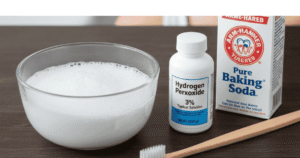
This is the heavy lifter of DIY whitening. Hydrogen peroxide is a natural bleaching agent that breaks down stain molecules. Combined with baking soda’s gentle abrasion, you get a one‑two punch that visibly brightens teeth in one to two weeks when used correctly.
What You’ll Need
Baking soda (fresh box; clumpy baking soda loses abrasiveness)
3% hydrogen peroxide (standard brown bottle from any drugstore; never use higher concentrations) A NIH systematic review on hydrogen peroxide found that when used as a long-term adjunct to daily oral hygiene, oxygenating mouthwashes reduce gingival redness and are safe for oral tissues.
Coconut oil (optional, but recommended for texture and gum health)
Small glass bowl and spoon (metal reacts with peroxide; use glass or ceramic)
Soft‑bristled toothbrush (medium or hard bristles + baking soda = enamel disaster)
Amber glass jar for storage (keeps peroxide stable and light out)
Step‑by‑Step Mixing Instructions
Measure 2 tablespoons of baking soda into a glass bowl.
Add 1 tablespoon of 3% hydrogen peroxide.
Stir until it forms a thick, spreadable paste—similar to commercial toothpaste consistency.
Optional: Mix in 1 tablespoon of melted coconut oil for a smoother feel and antibacterial benefits.
Transfer your paste to a storage jar. Do not dip your wet toothbrush directly into the jar—use a clean spoon each time to scoop out paste. This prevents bacteria from contaminating the entire batch.
How to Apply It Correctly for Fast Results
Wet your toothbrush lightly (too much water dilutes the paste).
Apply a pea‑sized amount to the brush.
Brush gently in circular motions for 2 minutes maximum. Scrubbing harder does not make it work faster; it strips enamel.
Spit—do not swallow—and rinse thoroughly with water.
Follow with your regular fluoride toothpaste (to remineralize enamel).
When to expect results: Surface stains usually lighten after 3–4 applications. Maximum visible whitening occurs after 2 weeks of consistent use (2–3 times per week).
Try this recipe tonight. Take a “before” photo in natural light, then another after two weeks. You’ll be amazed at the difference—and your wallet will thank you.
How to Make a Homemade Teeth Whitening Paste for Sensitive Teeth
If hot coffee or cold water makes you wince, the standard baking‑soda paste may be too abrasive for your enamel or expose sensitive dentin. You need a gentler homemade teeth whitening paste formula that still lifts stains without triggering pain.
Why Sensitive Teeth Need a Gentler Formula
Sensitivity usually means your enamel is thin or your gums have receded, exposing the underlying dentin. Abrasive particles can aggravate this, causing pain and even accelerating enamel loss. The goal is to minimize abrasion while still removing surface stains.
The Best Low‑Abrasion Ingredients
Baking soda (reduced amount) – Use half the usual quantity.
Coconut oil – Creates a creamy, lubricating base that reduces friction. (Curious about coconut oil’s role in whitening? See: Does Coconut Oil Whiten Teeth Naturally? A Dentist Reveals 3 Surprising Truths (& 1 Big Myth))
Xylitol – A natural sweetener that reduces cavity‑causing bacteria and doesn’t feed plaque. It also adds mild abrasion without scratching.
Calcium carbonate (food grade) – Found in eggshell powder; it’s a gentle polish that also remineralizes enamel.
Recipe: Baking Soda + Coconut Oil + Xylitol
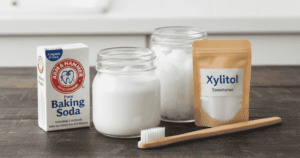
1 teaspoon baking soda
2 teaspoons coconut oil (softened, not hot)
½ teaspoon xylitol powder (grind xylitol granules in a coffee grinder if needed)
5 drops peppermint essential oil (optional, for taste)
Mix thoroughly. The texture will be softer than regular paste. Use 2–3 times per week, just like the standard recipe. Many users report zero sensitivity with this blend.
🦷 Special request: You asked about “homemade teeth whitening paste for sensitive gums recipe.” If your gums are the sensitive part—not the teeth—reduce the baking soda further to ½ teaspoon and increase coconut oil to 3 teaspoons. The oil acts as a barrier, protecting gum tissue while still gently polishing enamel. (7)
If you’ve avoided DIY whitening because of sensitive teeth or gums, this homemade teeth whitening paste is your green light. Mix a small batch today and test it on one or two teeth first. Your smile deserves a chance to shine—pain‑free. (8)
How to Whiten Teeth Without Baking Soda (3 Safe Alternatives)
Maybe you’re allergic to sodium bicarbonate, or you simply ran out. Perhaps you want to rotate ingredients to avoid over‑abrasion. Whatever the reason, you can still whiten naturally without baking soda. Here are three dentist‑approved alternatives—and one cautionary mention.
🧴 Exact match: “How to make whitening toothpaste without baking soda or peroxide” is a common search. Below are two recipes that skip both ingredients entirely, plus one that uses charcoal (with extreme caution).
Alternative #1: Coconut Oil + Turmeric Powder
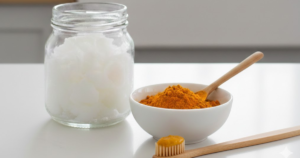
Turmeric contains curcumin, a natural anti‑inflammatory and antioxidant. It also has mild abrasive properties. Yes, it’s yellow—but it won’t stain your teeth when mixed with oil and brushed briefly. Rinse thoroughly, and no yellow remains.
Recipe: 2 tablespoons coconut oil + 1 teaspoon turmeric powder. Mix into a paste. Use 2× per week.
Evidence: A 2012 study found turmeric toothpaste as effective as commercial toothpaste in reducing plaque and gingivitis.
Alternative #2: Kaolin Clay + Hydrogen Peroxide
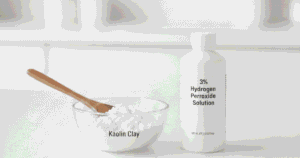
Kaolin (white) clay is extremely fine and non‑abrasive, yet it binds to stains and lifts them away. It’s also alkalizing and gentle on enamel.
Recipe: 1 tablespoon kaolin clay + 1 teaspoon 3% hydrogen peroxide + 1 teaspoon water. Stir until smooth. Use immediately (clay pastes don’t store well).
This is a true no‑baking‑soda, no‑peroxide option if you substitute water for the peroxide.
Alternative #3: Activated Charcoal (Use with Extreme Caution)
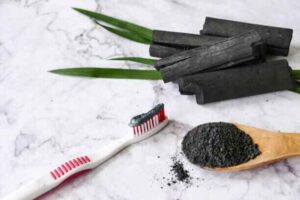
Charcoal is trendy—but controversial. The American Dental Association does not recommend charcoal toothpaste because most studies show it’s too abrasive and lacks fluoride. Still curious? Here’s how to do it safely:
Use only once a week.
Choose a finely powdered food‑grade charcoal.
Do not scrub—apply gently and rinse quickly.
Better yet: skip it and stick with the other two alternatives. Your teeth are going to get a real kick out of it!
⚖️ Comparison query: “Activated charcoal vs baking soda for teeth whitening which is better?” Winner: Baking soda. It’s milder, has a lot of safety data over the years, and is very cheap. Charcoal offers no proven advantage and carries real risks of scratching enamel.
Bookmark this section—you now have three backup plans. For a home experiment, try using turmeric or kaolin clay. The two can be bought through a health food store or online store. For even more natural whitening methods, check out our comprehensive list: 12 Dentist-Proven Hacks to Whiten Teeth Naturally Fast (Safe & Effective!)
The Best Natural Whitening Paste Recipes (3 Proven Options)
Here’s a quick‑reference summary of the top‑performing DIY pastes. Use this as your go‑to cheat sheet.
| Recipe | Key Ingredients | Best For | Frequency |
|---|---|---|---|
| Classic Baking Soda & Peroxide | Baking soda, 3% H₂O₂, coconut oil | Heavy coffee/tea stains, smokers | 2–3×/week |
| Gentle Coconut Maintenance | Coconut oil, baking soda (reduced), xylitol | Sensitive teeth, daily freshness | 2×/week |
| Eggshell Powder Remineralizing | Eggshell powder, coconut oil, baking soda | Weak enamel, minor stains | 2×/week |
Recipe 3 – Eggshell Powder Remineralizing Paste (Full Instructions)
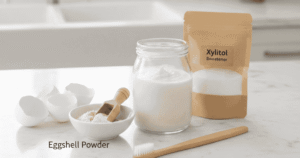
Eggshells are about 95% calcium carbonate, the same mineral that makes up tooth enamel. Finely ground, they provide a mild polish while supplying calcium to help remineralize tiny surface defects—perfect for homemade teeth whitening paste. (9)
How to make eggshell powder safely:
Collect 6–8 eggshells, remove membranes, and wash thoroughly.
Boil for 10 minutes to kill bacteria.
Bake at 200°F (93°C) for 10 minutes to dry completely.
Grind in a clean coffee grinder until it resembles flour—no gritty particles.
Paste recipe:
1 tablespoon eggshell powder
1 tablespoon baking soda
2 tablespoons coconut oil
Peppermint oil (optional)
Mix and store in a jar. Use this homemade teeth whitening paste 2 times per week. (10)
How to Make Whitening Toothpaste at Home – Step‑by‑Step Visual Guide
Tools You’ll Need
Glass mixing bowl
Spoon or mini whisk
Measuring spoons
Amber glass jar (4 oz)
Funnel (optional)
Mixing, Storing, and Using Your Paste
Always mix dry ingredients first (baking soda, xylitol, clay, etc.).
Add wet ingredients slowly—peroxide, melted coconut oil, water.
Stir until homogeneous. Lumps = uneven abrasion.
Spoon your paste into a jar. Label with the date—homemade paste lasts 2–3 weeks at room temperature (peroxide degrades; coconut oil can go rancid).
Never add water to the jar—moisture breeds bacteria. Scoop paste with a clean utensil each time.
📦 Storage deep dive: You asked “how to store homemade whitening toothpaste long term.” You don’t. These pastes contain no preservatives. Make small batches (1–2 tablespoons) and use within 14 days. For longer storage, freeze the dry ingredients separately and mix fresh weekly.
How Long Until You See Results?
Surface stains: Noticeable difference in 3–4 uses (1–2 weeks).
Deep yellowing: 4–6 weeks of consistent use.
Gray or brown stains (tetracycline, fluorosis): Zero results—these require professional whitening or veneers.
Save this guide to your phone or pin it. Having the exact ratios for homemade teeth whitening paste at your fingertips means you’re never tempted to guess—and guessing is how enamel gets damaged. (11)
4 Non‑Negotiable Safety Rules (Skip These and You’ll Regret It)
You can use the perfect recipe and still destroy your teeth if you ignore these rules. Memorize them.
Rule #1 – Never Use Acidic Ingredients Like Lemon or Vinegar
Lemon juice has a pH of ~2—it’s on par with battery acid. Acid softens enamel, and then you scrub it away with baking soda. Permanent damage. (We’ll cover more in the next section.)
Rule #2 – Brush Gently With a Soft Bristle Brush
Aggressive brushing + abrasive paste = wedge‑shaped defects at the gum line. Use light pressure—imagine you’re polishing an egg.
Rule #3 – 2 Minutes Max – No Leaving It On
Letting paste sit on teeth for 5, 10, or 15 minutes does not increase whitening—it increases enamel softening. Brush for two minutes, then rinse.
Rule #4 – Limit Use to 2–3 Times Per Week
Daily use of abrasive pastes wears down enamel over time. Even commercial whitening toothpastes are not meant for everyday use unless labeled “gentle.” Rest days allow enamel to remineralize.
Print these four rules and stick them on your bathroom mirror. If you teach them to one other person, you might save their smile, too.
5 Popular DIY Whitening Ingredients That Damage Your Teeth (Avoid These)
Not every “natural” remedy is safe. Some are actively destructive. Here’s what to never, ever put on your teeth—and why.
1. Lemon Juice and Strawberries – Acid Erodes Enamel
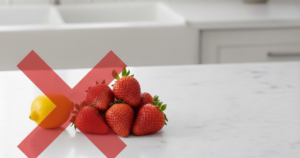
Strawberries contain citric acid and malic acid; lemon juice is straight acid. The acid dissolves enamel, and the fruit’s natural sugars feed cavity‑causing bacteria. The ADA explicitly advises against this method.
2. Apple Cider Vinegar – Softens Dentin

ACV is slightly less acidic than lemon, but still far below the pH threshold that demineralizes enamel. Repeated use leads to yellow, thinned teeth.
3. Activated Charcoal – Too Abrasive for Daily Use
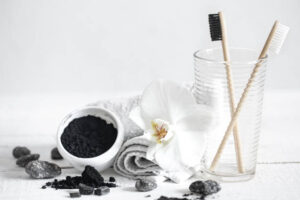
Charcoal particles are harder than enamel and can create microscopic scratches. Over time, these scratches trap stains and make teeth look duller, not brighter.
4. Hydrogen Peroxide Above 3% – Chemical Burns
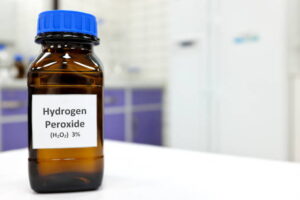
Some blogs suggest 10%, 20%, or even 35% peroxide. Never. High‑concentration peroxide can burn gums, damage soft tissue, and cause extreme sensitivity. Stick to drugstore 3%.
5. Crushed Pumice or Walnut Shells – Permanent Scratches
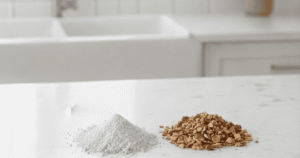
You’ll see “pumice toothpaste” recipes online. Pumice is what dentists use to polish enamel—but they use it with specialised equipment. At home, you’ll gouge your enamel.
Share this list with anyone who mentions rubbing lemon on their teeth. You might prevent irreversible damage.
How Much Money Can You Really Save with Homemade Teeth Whitening Paste? (Exact Cost Breakdown)
Let’s talk numbers—because “saves money” is in your title, and readers deserve proof that homemade teeth whitening paste delivers. (12)
Professional Whitening: $300–$600+
In‑office power bleaching averages $500 per session. Most patients need touch‑ups every 1–2 years. Homemade teeth whitening paste costs pennies. (13)
Store‑Bought Strips: $30–$60 per Box
A box of Crest 3D White strips costs about $45 and lasts two weeks. You’ll repeat every few months. Homemade teeth whitening paste lasts for months on a single $1 purchase. (14)
This DIY Paste: Less Than $0.50 per Batch
Baking soda: $0.03 per tablespoon
Hydrogen peroxide (3%): $0.10 per tablespoon
Coconut oil: $0.20 per tablespoon
Total per 2‑tablespoon batch: $0.33
Annual savings: If you use DIY paste 2×/week for a year, you spend about $17. Compare that to $270 on strips or $500+ on professional whitening. That’s $250–$483 saved per year thanks to homemade teeth whitening paste. (15)
🇬🇧 UK readers: You asked “diy teeth whitening for coffee stains uk” — the same homemade teeth whitening paste recipes work, and your savings are even greater given NHS dental costs and private whitening fees often exceeding £400. Baking soda and peroxide are widely available at Boots, Superdrug, and Tesco for under £2 total, enough for months of homemade teeth whitening paste. (16) (17)
Take the money you save by using homemade teeth whitening paste and treat yourself to something else that makes you smile—a nice dinner, a new book, or donate it to a dental charity. Your bright smile just funded it. (18)
Frequently Asked Questions About Homemade Teeth Whitening Paste
Can You Get Rid of Yellow Teeth Overnight?
No. Any method claiming overnight results either uses dangerous acid or is lying. Real whitening takes days to weeks. Be patient.
How Do I Whiten My Teeth ASAP?
“ASAP” still means 3–4 days. Use the baking soda + peroxide paste once daily for three consecutive days, then rest. Do not exceed this frequency.
What Whitens Teeth Really Fast?
The combination of mechanical stain removal (baking soda) and oxidation (peroxide) is the fastest safe method. Avoid gimmicks.
Can Yellow Teeth Become White Again?
Yes, if the yellowing is extrinsic (surface stains). No, if it’s intrinsic (inside the tooth). See the next section.
How Often Should You Use Homemade Teeth Whitening Paste? (19)
2–3 times per week. More frequent use risks enamel loss and sensitivity.
How Do You Make a Homemade Teeth Whitening Paste? (20)
Mix 2 parts baking soda with 1 part 3% hydrogen peroxide. Add coconut oil for texture if desired. That’s the core homemade teeth whitening paste recipe. (21)
How to Whiten Teeth at Home (Safely)
Follow this entire guide. Stick to proven recipes, avoid acids and charcoal, and respect the frequency rules.
Does Natural Teeth Whitening Actually Work?
For surface stains, yes. For deep discoloration, no. “Natural” does not mean “better,” but the right natural ingredients (baking soda, peroxide, coconut oil) are effective and safe when used correctly.
What Are the Best Natural Ingredients for Homemade Teeth Whitening Paste? (22)
Baking soda, 3% hydrogen peroxide, coconut oil, xylitol, and kaolin clay. These are the only ingredients with scientific backing or decades of safe traditional use in homemade teeth whitening paste. (23)
Is There a Natural Teeth Whitening Paste Recipe for Braces Wearers?
Yes—but only if you use the gentle coconut oil + xylitol recipe (no gritty particles). Avoid baking soda and charcoal altogether while wearing braces, as they can get trapped under brackets and cause decay. Always check with your orthodontist first.
Can Kids Use Homemade Teeth Whitening Paste? (24)
“Homemade teeth whitening paste for kids age 10” is a common search, but we do not recommend DIY whitening for children or teenagers unless explicitly prescribed by a dentist. Young teeth have larger pulp chambers and thinner enamel. Focus on good brushing habits and professional advice instead. (25)
Does Homemade Toothpaste That Actually Whitens Exist? (Reddit Asks)
Yes, and Reddit communities like r/Dentistry and r/NaturalBeauty frequently confirm that the baking soda + peroxide method delivers visible results. However, users often warn about overuse—so follow our safety rules and you’ll see the same success stories.
When DIY Homemade Teeth Whitening Paste Won’t Work – 3 Signs You Need a Dentist
Homemade teeth whitening paste is powerful, but it has limits. If any of these apply, save your time and enamel—book a professional consultation. (26)
Deep Stains (Tetracycline, Fluorosis)
Antibiotics like tetracycline cause gray or brown bands inside the tooth. No amount of surface polishing can reach those stains.
Intrinsic Discoloration
Teeth can darken from trauma, aging, or certain diseases. The color comes from within the dentin. Whitening paste only works on the outer enamel.
Worn Enamel or Receding Gums
If your teeth look translucent at the edges or your gums have pulled back, abrasive pastes will worsen the problem. You need desensitising professional treatments or restorative options.
If you checked any of these boxes, do not pass GO. Call your dentist this week. A consultation is usually free or low‑cost, and it could save your teeth from the effects of improper homemade teeth whitening paste use. (27)
Final Verdict – Is Homemade Teeth Whitening Paste Worth It?
Who Should Use It
Coffee, tea, wine, or tobacco users with surface stains.
Budget‑conscious individuals willing to follow safety rules for homemade teeth whitening paste. (28)
People who prefer natural, chemical‑light alternatives.
Who Should Avoid It
Anyone with unaddressed cavities, gum disease, or extreme sensitivity.
People who can’t commit to the 2–3×/week frequency limit.
Those expecting dramatic, Hollywood‑level whitening (professional treatments are stronger).
One‑Sentence Takeaway
Homemade teeth whitening paste works safely and saves hundreds of dollars—but only if you use the right ingredients, the right ratios, and the right discipline. (29)
Your Next Step
You now have the complete, dentist‑informed blueprint for homemade teeth whitening paste. Bookmark this page, mix your first batch, and start your before‑and‑after photos. Then share this article with a friend who’s still rubbing lemons on their teeth—you might just save their smile with proper homemade teeth whitening paste knowledge. (30)
Have questions? Drop them in the comments below. We read every one and answer with cited sources. And if you want to support this work, pin one of the recipes to Pinterest. Every share helps someone avoid expensive, dangerous mistakes.
Ready for a brighter, healthier smile? Your kitchen is waiting.
Disclaimer: This article is for informational purposes only and does not constitute medical advice. Always consult with a licensed dentist before starting any new oral care regime.